
Previous
Next
Single-Knife vs Double-Knife Slitting Systems:The Real Difference in Cutting Logic,Control,and ROI
1.The Essential Difference Between Single-Knife and Double-Knife Slitting Systems
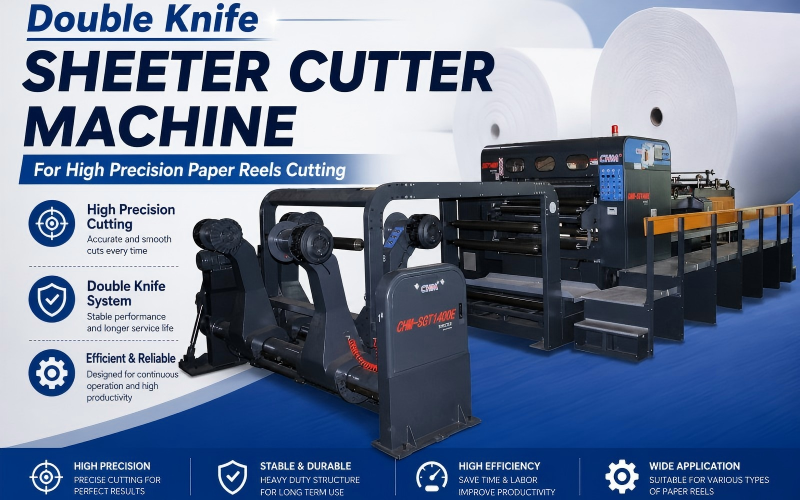
Many buyers believe the only difference between a single-knife and a double-knife slitting machine is the number of blades. In reality, the deeper difference is not simply one knife versus two knives. It is the difference between a fracture-dominant cutting system and a control-dominant shearing system.
A single-knife system mainly uses instantaneous impact force to make the material break. A double-knife system uses synchronized upper and lower knives to create a stable, continuous shearing action.
In simple terms, a single-knife system lets the material break, while a double-knife system controls how the material is cut.
This fundamental difference directly affects cut quality, machine stability, blade life, production efficiency, downtime, and long-term profitability.
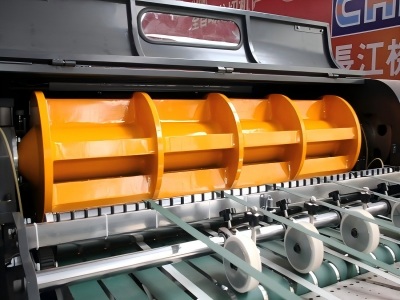
2. Cutting Force Determines Cut Quality, Especially for Thick Materials
Single-knife cutting can work for thin materials. However, when the material becomes thicker or has higher shear resistance, its limitations become much more obvious.
Because a single-knife system relies on instant impact rather than a continuous shearing process, it is more likely to cause incomplete cutting, irregular fracture surfaces, heavy burrs, internal micro-cracks, and structural damage.
In practical terms, single-knife cutting is similar to forcing the material open.
Double-knife cutting is closer to pure shearing. With a stable cutting angle between the upper and lower knife rolls, stress is distributed more evenly along the cutting line.
Even when processing high-shear-strength paperboard or specialty materials, a double-knife system can achieve complete cutting, smoother edges, less structural damage, and fewer visible burrs.
The core issue is not only whether a machine can cut thick material. The real issue is whether thick material should be cut by impact or by controlled shear.
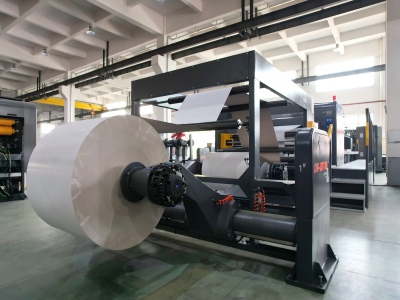
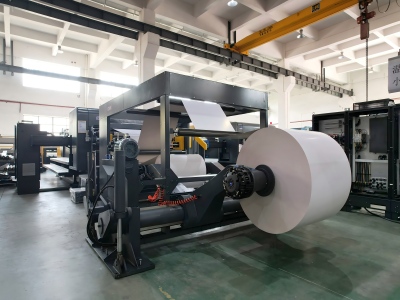
3. Force Distribution Determines Blade Life and Long-Term Operating Cost
The single-point loading and high-impact nature of a single-knife system affects both cutting quality and blade life. Because the load is repeatedly concentrated in a local contact area, the blade can develop uneven wear points.
This usually means uneven blade wear, shorter service life, more frequent blade replacement, and more downtime for maintenance.
In many production environments, a single-knife blade may last around 6 to 8 months, often requiring 1.5 to 2 replacements per year, depending on material type, machine condition, operating speed, and maintenance practices.
A double-knife system distributes force more evenly through a paired shearing structure. Blade wear is usually smoother and more gradual, which can extend service life and reduce replacement frequency.
In many applications, double-knife blades may last around 8 to 12 months or longer, and many plants replace them approximately once per year, depending on actual production conditions.
Many buyers focus only on the purchase price of the machine. However, the price difference is paid once, while blade cost, downtime, waste, and unstable output are paid every year.
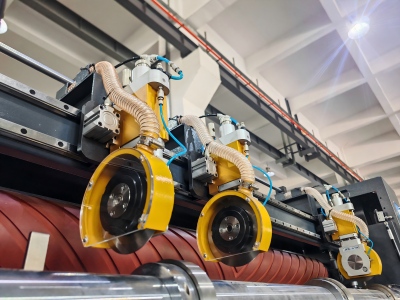
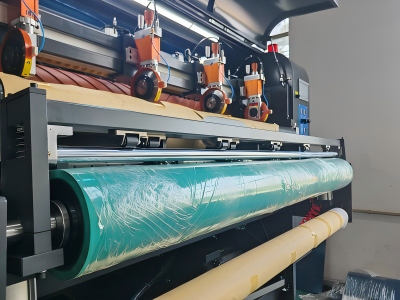
4. Machine Structure Determines Vibration, and Vibration Determines Accuracy
A single-knife structure often uses a single-roll or cantilever-type loading design. This structure can be more sensitive to eccentric load, insufficient dynamic balance, high-frequency vibration, and resonance risk.
At higher speeds, vibration can create frequent adjustments, more material waste, lower cutting accuracy, and real output that is lower than theoretical output.
In many converting plants, profit is not limited by machine speed alone. It is often lost through stoppage, instability, trimming waste, and rework.
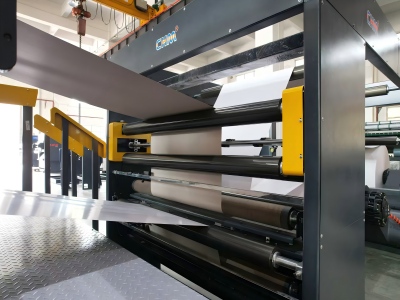
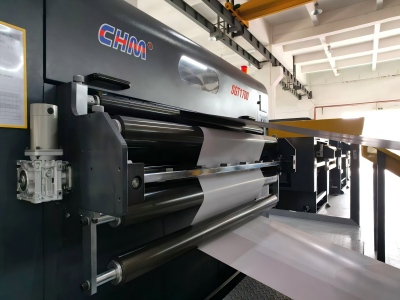
A double-knife system usually uses a more symmetrical dual-roll structure, balanced force design, and synchronized coaxial operation. This helps reduce vibration from the structural level and improves rigidity.
The result is more stable high-speed operation, continuous production, lower waste, and higher-precision output.
Real productivity is not only about running fast. It is about producing stable, saleable sheets continuously.
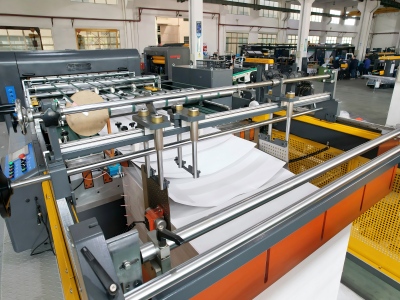
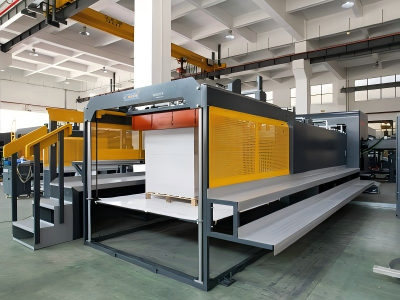
5. Tension Plays Completely Different Roles in the Two Systems
In a single-knife system, web tension is often responsible not only for material transportation but also for assisting the cutting process. This can increase the risk of tearing, vibration, web deviation, and unstable sheet length.
In other words, a single-knife system may need tension to help complete the cut.
In a double-knife system, tension mainly transports and stabilizes the material, while the cutting action is completed by the synchronized knife system itself.
This makes the double-knife process more stable, more controllable, and easier to repeat when switching between product specifications.
The key advantage is that the cutting system does not need the web to “help break itself.” The machine controls the cut.
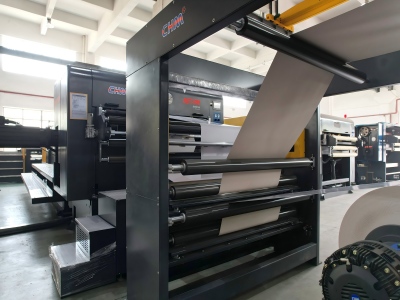
6. Double-Knife Systems Cost More Because of Synchronization Control, Not Just an Extra Knife
Many people assume a double-knife machine is more expensive only because it has an additional blade. In reality, the major cost difference comes from the synchronization control system behind the mechanical structure.
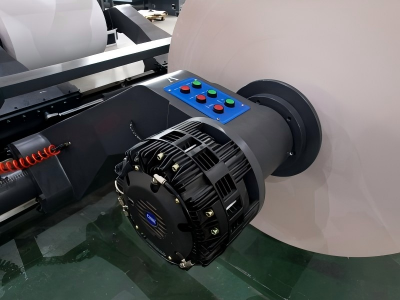
A typical single-knife system may use a single motor, open-loop control, and basic speed control. Its control capability is limited because it does not usually provide advanced phase control, precise synchronization control, or strong coordination between knife rolls.
A modern double-knife system often uses dual servo motors, PLC closed-loop control, and electronic gear synchronization.
These systems can provide phase control, synchronization control, tension coordination, and speed coordination. In high-end configurations, synchronization errors can be controlled to extremely small angular tolerances, depending on the machine design and control platform.
Therefore, the higher cost of a double-knife system is not only mechanical. It reflects the value of a high-precision synchronized cutting platform.
7. How to Choose Between Single-Knife and Double-Knife Slitting Systems
The right choice depends on your material range, production volume, quality requirements, budget, and long-term business goal.
Single-knife systems are usually more suitable for thinner materials, smaller batches, frequent specification changes, limited budgets, and projects that prioritize faster payback.
Typical applications include office paper, general packaging paper, label paper, and other lower-thickness materials where edge quality requirements are moderate.
Double-knife systems are usually more suitable for thicker materials, large-volume production, high-precision orders, and products that require clean, stable, high-quality cutting edges.
Typical applications include premium packaging, folding carton board, high-grade paperboard, specialty materials, and production lines where long-term stability is more important than the lowest initial investment.
8. Core Advantages of Double-Knife Slitting Systems
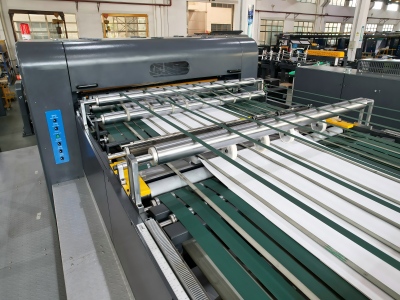
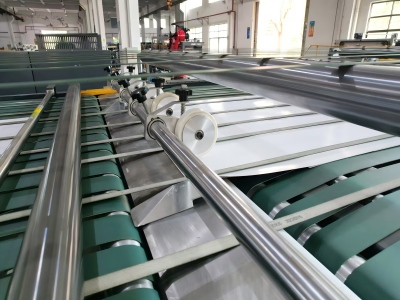
Compared with single-knife systems, double-knife systems offer several important advantages: more uniform force distribution, lower vibration, fewer burrs, less fiber tearing, less dust, more accurate synchronization, and stronger process stability.
These advantages are especially valuable in high-speed, high-precision paper sheeting and board converting applications.
A double-knife system is not simply a machine with one more knife. It is an upgrade in mechanical structure, force logic, and control philosophy.
9. Global Paper Sheeter and Cutting Machine Brands to Know
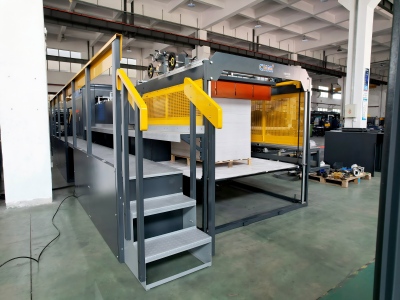
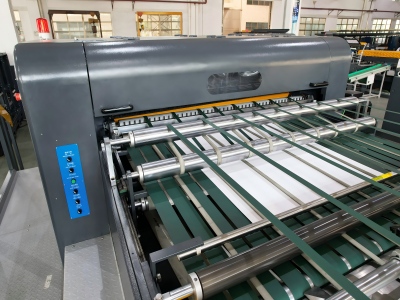
When evaluating paper sheeters, slitting systems, and rotary cutting machines, buyers often compare their requirements with well-known global machinery brands. These brands are useful references for understanding market expectations in precision, automation, and long-term reliability.
BW Papersystems is a major name in industrial paper converting solutions. Its portfolio includes folio-size, cut-size, and digital-size sheeters, as well as packaging and converting equipment for paper, board, and related materials. The company also connects several recognized technologies and brands in the sheeting field, including WillPemcoBielomatik and MarquipWardUnited.
Pasaban is a Spanish manufacturer known for customized paper and cardboard converting machinery. Its solutions include paper sheeters and winders for paper, board, security papers, and specialty papers. Pasaban positions itself around customized solutions and continuous improvement for the paper industry.
Jagenberg is another historically recognized name in web-processing and converting machinery. In the sheeter market, Jagenberg-related technologies are often associated with precision, reliability, and efficient cutting systems.
E. C.H. Will, now commonly referenced within the WillPemcoBielomatik / BW Papersystems context, has a long history in paper converting equipment, including sheeting and paper processing lines.
These companies show that the global market is moving toward more accurate, automated, and stable cutting systems. For buyers, the key is not only choosing a famous brand, but matching the cutting principle, control system, and machine configuration to the real production scenario.
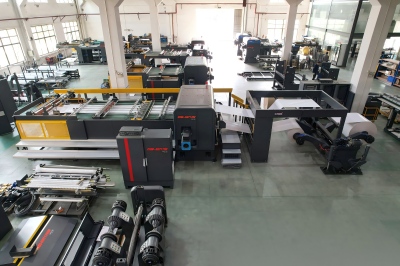
10. Conclusion: Single-Knife Cuts Paper; Double-Knife Cuts Long-Term Profit
The difference between single-knife and double-knife systems is not only a difference in machine structure. It is a difference in cutting logic and production philosophy.
The core purpose of a single-knife system is to complete the cut. The core purpose of a double-knife system is to complete the cut with stability, quality, repeatability, and long-term control.
One sentence summary: single-knife systems cut paper; double-knife systems help cut long-term profit more consistently.
If your priority is faster payback, a single-knife system may be enough. If your priority is higher long-term ROI, lower waste, better edge quality, and stable high-volume production, a double-knife system is usually the stronger choice.
Quick Comparison Table: Single-Knife vs Double-Knife Systems
Comparison Item | Single-Knife System | Double-Knife System |
Cutting logic | Impact fracture / impact-assisted cutting | Controlled continuous shearing |
Force distribution | Concentrated local load | Balanced two-directional shear |
Edge quality | More likely to produce burrs and dust | Cleaner edge with fewer burrs |
Thick material performance | More sensitive to incomplete cutting and cracking | Better for thick board and high-resistance materials |
Blade wear | More uneven; usually shorter life | More even; usually longer life |
Machine vibration | Higher vibration risk at speed | Lower vibration with balanced structure |
Control system | Usually simpler speed control | Servo + PLC + electronic synchronization |
Best fit | Thin material, lower budget, quick payback | High-volume, high-quality, higher ROI production |
FAQ: Single-Knife and Double-Knife Slitting Systems
FAQ 1. Is a double-knife slitting system always better than a single-knife system?
No. A double-knife system is not always necessary. For thin materials, small batches, and budget-sensitive production, a single-knife system can be practical. For thick materials, clean edges, high-speed production, and stable long-term output, a double-knife system is usually more suitable.
FAQ 2. Why does a double-knife system produce fewer burrs?
Because it uses controlled shearing rather than impact-dominant breaking. The upper and lower knives apply more uniform force along the cutting line, reducing fiber tearing and edge damage.
FAQ 3. Why is synchronization so important in double-knife cutting?
Synchronization controls the relationship between the upper knife, lower knife, web tension, and machine speed. Better synchronization improves cut accuracy, edge quality, repeatability, and high-speed stability.
FAQ 4. Which system is better for paperboard and premium packaging?
For paperboard, folding carton board, premium packaging, and specialty materials, a double-knife system is generally the better choice because it provides more stable cutting force and cleaner edges.
FAQ 5. What should buyers compare before choosing a paper sheeter machine?
Buyers should compare material range, GSM, cutting width, speed, blade life, synchronization control, downtime, edge quality requirements, after-sales service, and long-term ROI.
Reference Sources for Brand Information
· BW Papersystems: Industrial paper converting solutions, folio-size, cut-size and digital-size sheeters, and paper/board converting equipment. Source: https://www.bwpapersystems.com/
· BW Papersystems Products: Portfolio information for folio-size, cut-size, digital-size sheeters and packaging/converting equipment. Source: https://www.bwpapersystems.com/products
· Pasaban: Customized paper and cardboard converting solutions, including sheeters and related machinery. Source: https://www.pasaban.com/en/home
· Pasaban Paper Sheeters: Paper sheeters for cellulose, paper, cardboard, security papers, and specialty papers. Source: https://www.pasaban.com/en/machines/paper-sheeter
· BW Papersystems JAG Synchro: Jagenberg sheeter technology positioned around precise, reliable, and efficient cutting. Source: https://www.bwpapersystems.com/products/jag-synchro
· BW Papersystems WillPemcoBielomatik: WillPemcoBielomatik sheeting and paper converting technology within BW Papersystems. Source: https://www.bwpapersystems.com/products/willpemcobielomatik
Editorial note: Technical service-life ranges in this article are indicative and should be adjusted according to actual material type, machine condition, operating speed, maintenance quality, and production environment.